News
The Intelligence Gap: AI is Here. Now Comes the Hard Part.
By Ronald Lenz, Managing Director, Analytics for a Better World
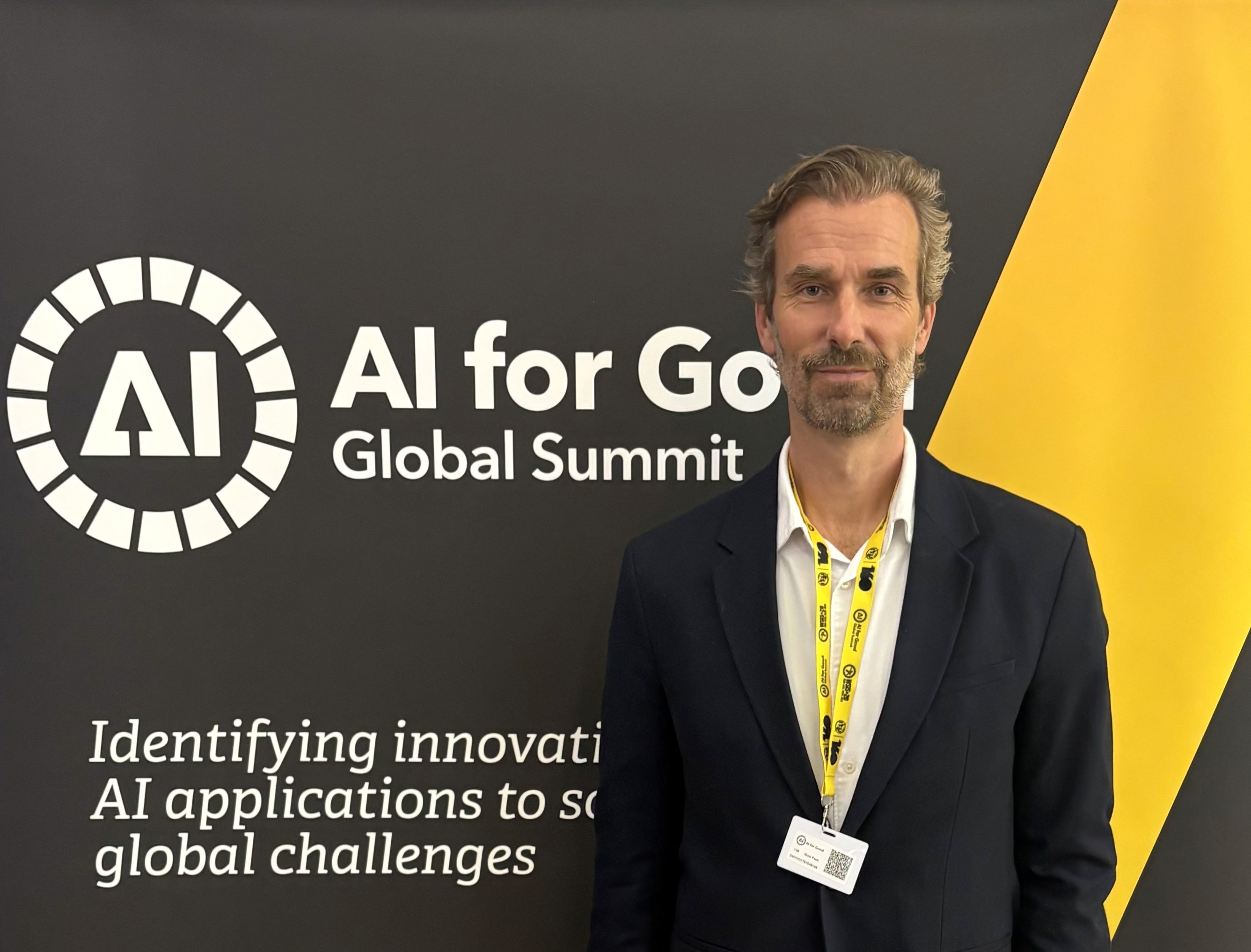
Every day, NGOs, governments and international organisations make decisions that shape the lives of millions of people. They decide where to invest scarce resources, how to deliver essential services and which interventions will create the greatest impact. These are not abstract strategic choices. They are decisions about whether a health clinic gets built in the right village, whether vaccines reach the right community before they expire, whether a humanitarian convoy takes the route that saves hours and lives.
For decades, the private sector has used analytics, artificial intelligence and decision science to optimise investments, operations and supply chains. A logistics company knows, to the minute, where its trucks should be. A bank knows, in real time, how to allocate capital across competing risks. An airline optimises thousands of decisions simultaneously before you've finished your morning coffee.
The social sector has not had access to the same tools. It should.
That gap is why I joined Analytics for a Better World as Managing Director.
My path here was not a straight line, but in hindsight it feels almost inevitable. For most of my career, I have worked on innovation for large societal challenges, building collaborations between public institutions, private sector partners, civil society and academic researchers around problems that none of them could solve alone. That work taught me something that sounds obvious but is surprisingly hard to act on: the organisations closest to the hardest problems are almost always the ones with the least capacity to solve them at scale.
They have the mission. They have the people. They often have the data. What they lack is the infrastructure to turn that data into better decisions.
Here is the paradox at the heart of this moment. Official development assistance fell by 23.1% in real terms in 2025 compared to 2024, the largest annual drop in the history of ODA, bringing funding back to levels last seen in 2015, when the 2030 Agenda was first adopted. The United States alone cut its development aid by 57%. The downward trend is expected to continue in 2026. (Source: OECD, April 2026)
At the same time, the need has never been greater. The UN's 2025 SDG Report found that only 35 per cent of targets are on track or making moderate progress, while 18 per cent have regressed. "We are facing a development emergency," said UN Secretary-General António Guterres. Conflict is escalating. Disaster risk continues to grow, driven by more intense climate hazards, with reported direct economic losses now averaging $202 billion a year. Good health and well-being is the single most affected goal of all because of the Demographic and Health Surveys funding and data disruption. (Source: UN SDG Report 2025).
Mission-driven organisations are being asked to do more with dramatically less. That is not a gap that good intentions will close. It requires a fundamental rethink of how these organisations operate and make decisions.
This is where prescriptive AI enters, and I want to be precise about what it actually means.
Most organisations use data to understand what happened, or to predict what might happen. Prescriptive AI goes a step further. It answers a harder question: given what is happening and what is likely to happen, what should we do? It recommends the best course of action while respecting real-world constraints: budgets, capacity, equity, time. It is the difference between a weather forecast and a flight plan.
For an NGO, that means questions like: how do we allocate scarce staff and vehicles across a response area? How do we reach the most beneficiaries on a limited budget? Where should we locate our facilities? How should we distribute food or medicines when supply is uncertain? These are not simple problems. Off-the-shelf tools don't solve them. Standard dashboards don't solve them. You need something more sophisticated, and you need people who have spent careers thinking about exactly this class of problem.
I am fortunate to work alongside colleagues like professors Dick den Hertog and Joaquim Gromicho, two of the world's leading researchers in operations research and prescriptive AI, with decades of experience applying advanced optimisation to some of the most complex decision environments on earth.
That expertise matters. But expertise alone does not scale.
ABW's central challenge, and ambition, is scale. The knowledge is there. The tools exist. The question is how to make them genuinely available to NGOs, governments and international organisations everywhere, not as pilots or one-off projects, but embedded, structural and at scale. That means rigorous research by leading universities and major corporates who bring deep technology and data science expertise to this mission. It means translating that knowledge into practical solutions together with mission-driven organisations. It means building lasting capability until working with data and AI becomes the norm, not the exception. And it means being part of the growing global AI for Good movement, alongside organisations like Humanity AI, Schmidt Futures, the Skoll Foundation and Current AI, united by one question: how do these tools serve the public interest, not just the bottom line?
Generative AI has opened many eyes to efficiency gains, mostly on internal workflows. That is a start. But the much larger opportunity is in the core operations of mission-driven organisations: the decisions that determine where they act, how they act, and who gets reached.
History will remember the technology. But it will measure us by whether we used it in time, and for what.
If you lead a mission-driven organisation, come and talk to us. If you lead a company whose data science teams want to contribute to something with genuine impact, come and join us. If you are a university that wants to do joint research at the frontier of AI and societal impact, we want to hear from you. If you are a foundation that sees AI for Good as one of the highest-leverage bets you can make right now, let's talk.
There is no good reason to wait.
More updates

News
The Hidden Millions in Humanitarian Logistics
Humanitarian organisations face a difficult equation: growing needs, shrinking budgets and millions of people who may not receive the assistance they require. Yet one of the largest opportunities to close this gap may be hiding in plain sight: the way humanitarian aid is procured, stored, transported and delivered.
Read more

Research Updates
New optimisation method makes huge-scale water-well planning solvable
A research project that began through the Analytics for a Better World Fellowship, responding to a Red Cross challenge in West Darfur, has been accepted for publication in OMEGA. The study develops a scalable way to identify where water wells could be placed so that as many people as possible live within 500 metres of one.
Read more

Research Updates
Ocean-plastic optimisation research wins INFORMS sustainability award
Research by Analytics for a Better World, the University of Amsterdam, London Business School and The Ocean Cleanup has received the INFORMS ENRE Best Publication Award in Environment and Sustainability.
Read more