Research
Using analytics to support COVID-19 decisions
For the first meet-up of the Research series, our guest speaker will be Prof. Dimitris Bertsimas (MIT, Cambridge), who will present the ongoing work of his group of 20+ PhD and master's students and colleagues at MIT on a variety of aspects of COVID-19
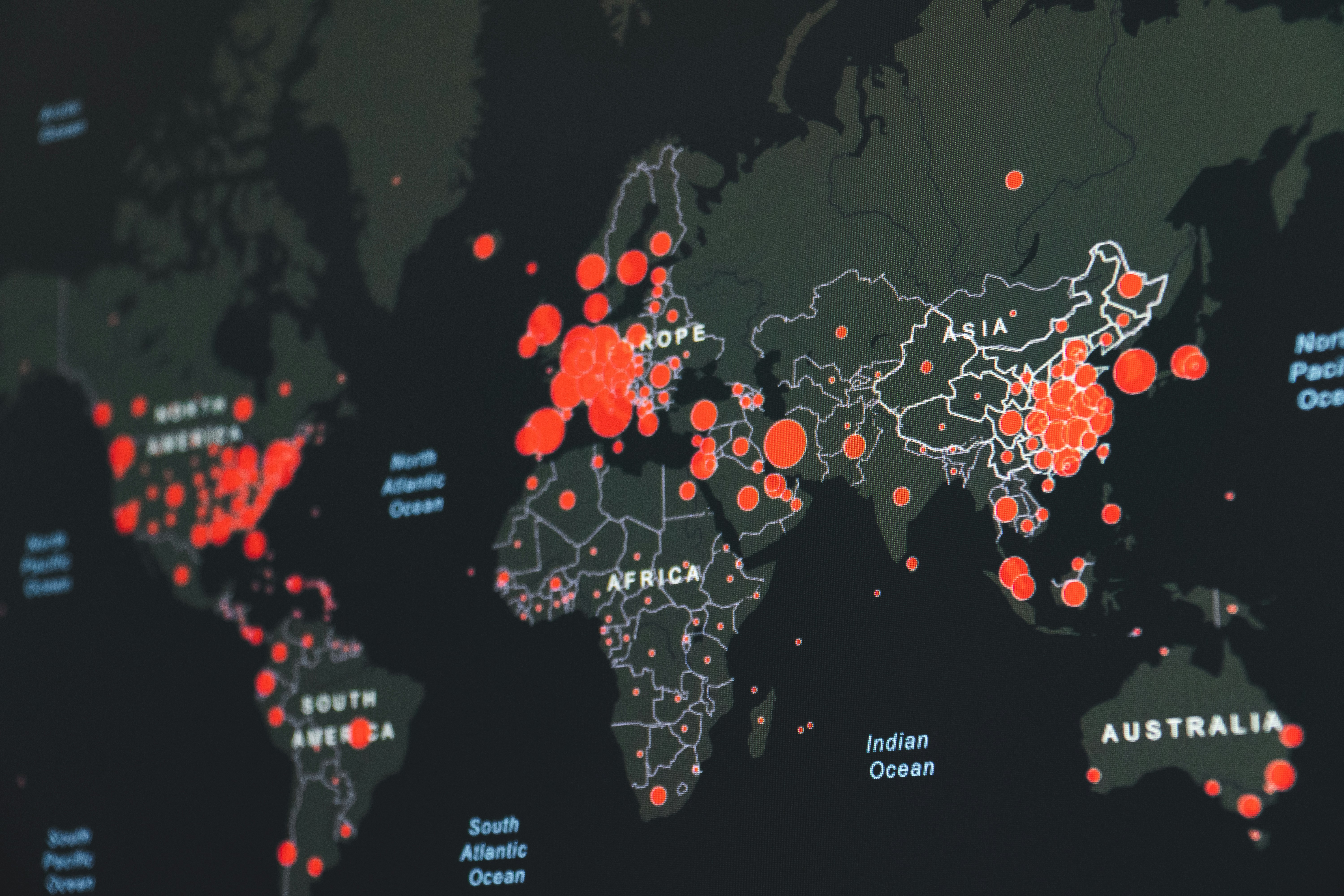
Prof. Dimitris Bertsimas from MIT will present work developed with a team of more than 20 PhD and master’s students and colleagues on using analytics to support COVID-19 decisions (the website has many downloadable datasets and models). The projects cover epidemic modelling, patient-risk prediction, ICU and ventilator allocation, and a dataset built from more than 130 COVID-19 studies published in March 2020.
How can analytics support decisions during a pandemic?
COVID-19 created several connected decision problems: understanding how infections may develop, identifying which patients face a higher risk of severe outcomes, allocating limited healthcare resources and keeping track of a rapidly expanding body of research.
The MIT team is developing analytical tools around each of these questions, with an emphasis on rapid prototyping and implementation.
How can the evolution of COVID-19 be modelled?
Bertsimas will discuss DELPHI, a new epidemiological model developed to describe and forecast the evolution of COVID-19.
An epidemiological model uses information about how a disease spreads to estimate how infections and other outcomes may develop over time.
The model, code and supporting material are available through the project’s GitHub repository:
Can patient data identify who faces a higher risk of mortality?
The second project uses machine learning to predict mortality using patient data from a hospital in Cremona, Italy.
The model is based on optimal classification trees. These are decision-tree models that use combinations of patient characteristics to classify people into different risk groups.
The team has made the model available through an online risk calculator:
COVID-19 mortality risk calculator
Depending on the progress of the research, Bertsimas will also discuss how these predictions could be used to prioritise patients for ICU care when capacity is limited, with the objective of saving more lives.
How should limited ventilators be allocated across the United States?
A third project focuses on the allocation of ventilators between US states.
When ventilator supply is limited, and demand differs by location, the question becomes a prescriptive analytics problem: how should the available equipment be distributed as needs change?
The team developed an optimisation model to compare possible allocation decisions across states.
More information is available here:
COVID-19 ventilator allocation model
What can be learned from more than 130 COVID-19 papers?
The group has also developed a data-generation process using findings from more than 130 COVID-19 papers written in March 2020.
Bringing information from many individual studies into a structured dataset allows researchers to compare findings and identify patterns across the emerging evidence base.
The dataset is available here:
The team has also developed an interactive tool for exploring insights from the data:
Interactive COVID-19 research graph
Why is rapid implementation central to the work?
The emphasis across these projects has been on rapid prototyping and implementation.
During a fast-moving pandemic, evidence and operational needs can change quickly. The team has therefore focused on developing models that can be tested, shared and updated while the crisis is still unfolding.
Many of the models and datasets are openly available through covidanalytics.io, allowing researchers to examine the methods and build on them.
What can this mean for the wider research community?
The talk is also an invitation to researchers around the world to contribute their own ideas and analyses.
By making models, code and data available, the COVID Analytics team aims to create a collaborative research effort in which different perspectives and analytical approaches can contribute to addressing the pandemic.
The shared objective is straightforward: to use analytics collaboratively to improve understanding of COVID-19 and inform the difficult decisions created by the pandemic.
More updates

News
The Hidden Millions in Humanitarian Logistics
Humanitarian organisations face a difficult equation: growing needs, shrinking budgets and millions of people who may not receive the assistance they require. Yet one of the largest opportunities to close this gap may be hiding in plain sight: the way humanitarian aid is procured, stored, transported and delivered.
Read more

Research Updates
New optimisation method makes huge-scale water-well planning solvable
A research project that began through the Analytics for a Better World Fellowship, responding to a Red Cross challenge in West Darfur, has been accepted for publication in OMEGA. The study develops a scalable way to identify where water wells could be placed so that as many people as possible live within 500 metres of one.
Read more

Research Updates
Ocean-plastic optimisation research wins INFORMS sustainability award
Research by Analytics for a Better World, the University of Amsterdam, London Business School and The Ocean Cleanup has received the INFORMS ENRE Best Publication Award in Environment and Sustainability.
Read more