
Research
#13 Research meet-up: Optimised routes nearly doubled simulated ocean-plastic collection
More than 8 million tonnes of plastic enter the seas each year, with ocean currents concentrating part of it in areas such as the Great Pacific Garbage Patch. Research developed with The Ocean Cleanup found that optimisation could nearly double average plastic collection in simulation by choosing routes that respond to changing plastic concentrations and weather conditions.
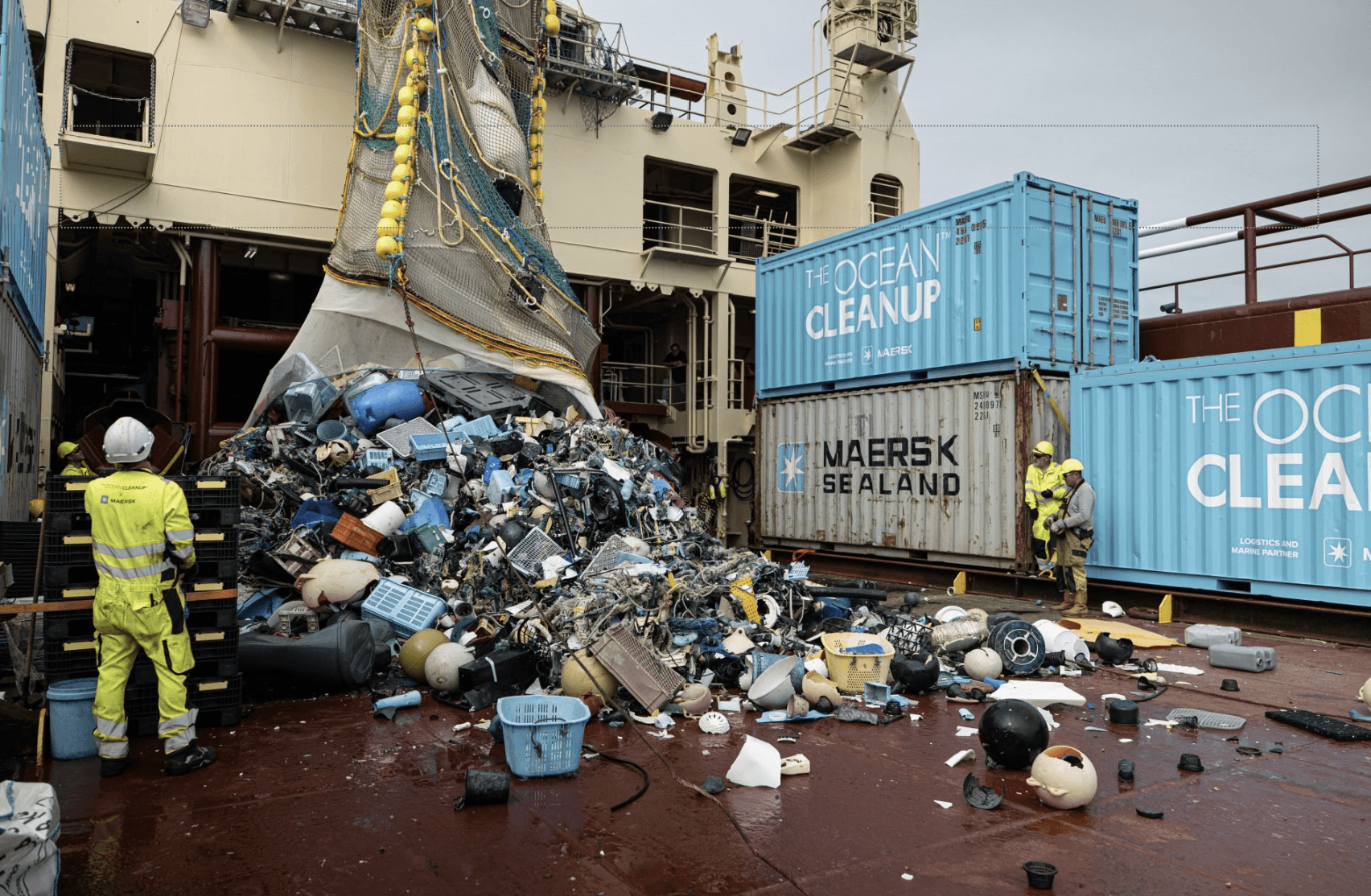
More than 8 million tonnes of plastic enter the seas each year, with ocean currents concentrating part of it in areas such as the Great Pacific Garbage Patch. Research developed with The Ocean Cleanup found that optimisation could nearly double average plastic collection in simulation by choosing routes that respond to changing plastic concentrations and weather conditions.
This meet-up will be led by Jean Pauphilet, an Assistant Professor of Management Science and Operations at London Business School. His research covers large-scale optimisation, optimisation under uncertainty and machine learning, with applications including healthcare and sustainable operations.
He received a PhD in Operations Research from MIT and a Diplôme d'ingénieur from École Polytechnique in Paris. His research has appeared in journals including Operations Research, Mathematical Programming and the Journal of Machine Learning Research, and has received awards including the INFORMS George E. Nicholson and Computing Society best student paper awards.
Why is collecting ocean plastic a routing problem?
The Ocean Cleanup is a Dutch nonprofit with a mission to remove 90% of floating ocean plastic pollution. Its technology uses a system similar to a large fishing net to collect floating plastic and has operated in the Great Pacific Garbage Patch (GPGP) since mid-2021.
The challenge is that neither the plastic nor the operating conditions remain fixed. Ocean currents move plastic concentrations, while wave height and wind speed affect where and when collection systems can operate.
Why is this a prescriptive analytics problem?
The question is therefore not only where plastic is located, but which route a collection system should follow to collect as much plastic as possible as conditions change.
In collaboration with The Ocean Cleanup, a research team from London Business School, the University of Amsterdam, and the Ocean Cleanup developed a dynamic optimisation algorithm. Dynamic optimisation repeatedly adjusts decisions as the situation changes rather than planning one fixed route in advance. The model incorporates changing plastic distributions alongside weather conditions, including wave height and wind speed.
What did the simulations show?
In the simulation, the optimisation-based strategy nearly doubled the average plastic collection yield compared with the alternative strategy used for comparison.
That result is a modelled improvement, rather than evidence that twice as much plastic has already been collected in real operations. It shows the potential value of using route optimisation to make collection systems more productive with the same operating capacity.
More updates

News
The Hidden Millions in Humanitarian Logistics
Humanitarian organisations face a difficult equation: growing needs, shrinking budgets and millions of people who may not receive the assistance they require. Yet one of the largest opportunities to close this gap may be hiding in plain sight: the way humanitarian aid is procured, stored, transported and delivered.
Read more

Research Updates
New optimisation method makes huge-scale water-well planning solvable
A research project that began through the Analytics for a Better World Fellowship, responding to a Red Cross challenge in West Darfur, has been accepted for publication in OMEGA. The study develops a scalable way to identify where water wells could be placed so that as many people as possible live within 500 metres of one.
Read more

Research Updates
Ocean-plastic optimisation research wins INFORMS sustainability award
Research by Analytics for a Better World, the University of Amsterdam, London Business School and The Ocean Cleanup has received the INFORMS ENRE Best Publication Award in Environment and Sustainability.
Read more