What problem was Amref trying to solve?
Direct-mail fundraising generates income for Amref, but every letter also costs money to print and send. Some recipients are much more likely to respond than others, so sending the same volume of mail regardless of response likelihood can use resources without generating additional donations.
For Amref, the question was therefore specific: could it send fewer letters without reducing the income generated by its fundraising campaigns?
Daniël Rozendal, a data scientist at Amref Health Africa with more than 15 years of experience in data analysis and marketing, brought this question into the third cohort of the Analytics for a Better World Fellowship in 2024.
"I chose the Analytics for a Better World Fellowship because I wanted to broaden my technical analytics skills and develop myself further in applying data to real-world challenges."
Daniël Rozendal, Data Scientist at Amref Health Africa
Why is this relevant to prescriptive analytics?
Rozendal developed a model that estimated how likely individual donors were to respond to a fundraising letter.
But Amref ultimately needed to make a decision, namely, who should receive a mailing and who should not.
That is where prediction becomes useful for decision-making. Instead of using the model simply to describe donor behaviour, Amref used the predicted response likelihood to decide where its mailing budget was most likely to be productive.
The project therefore connects predictive analytics with a prescriptive question: given limited fundraising resources, how should those resources be allocated?
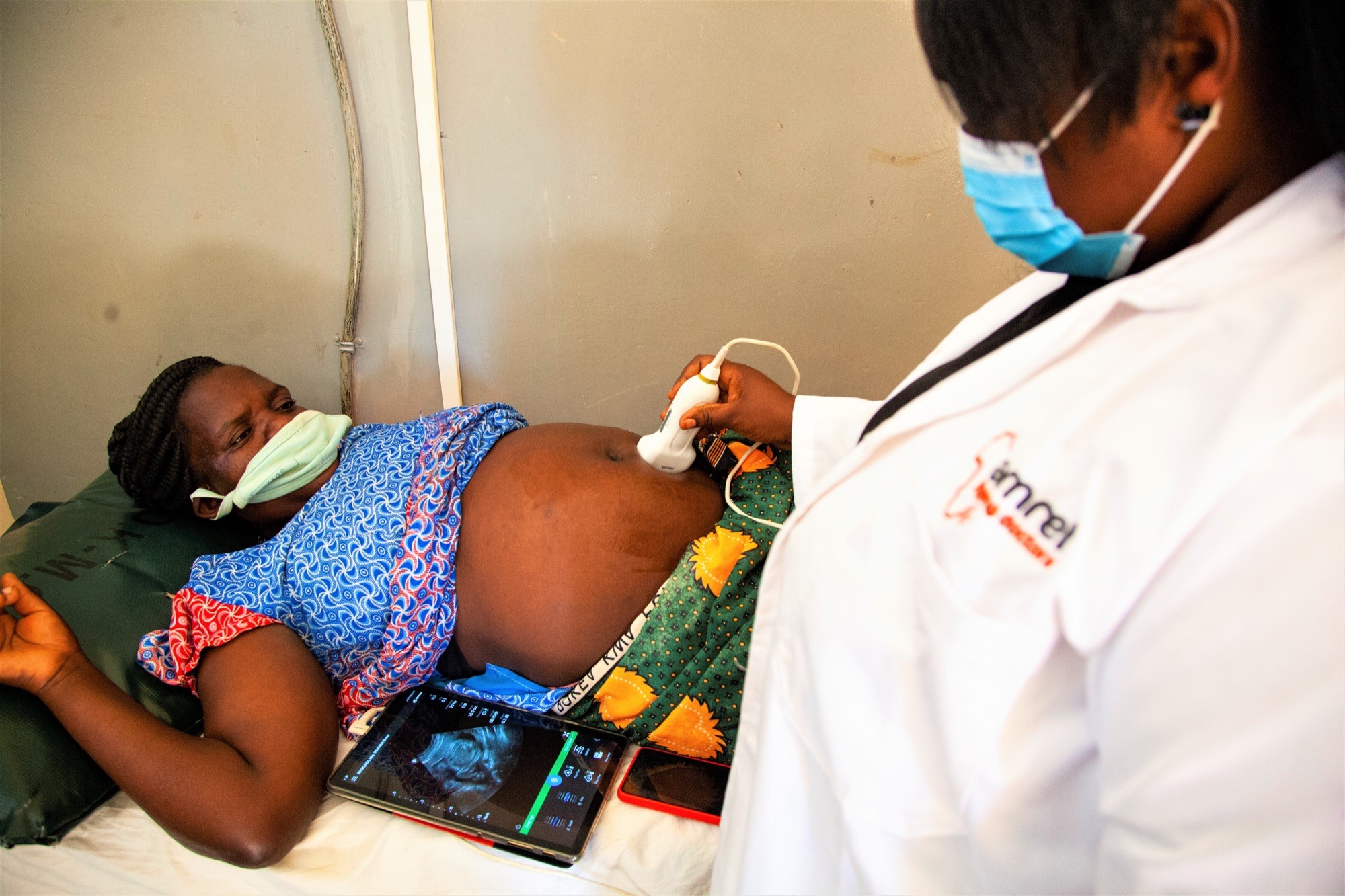
Photograph from Amref Health Africa's Gallery of a Health Programme for Women in Kenya
How has the Fellowship contributed to turning the problem into an opportunity?
Rozendal developed the model during the ten-week Analytics for a Better World Fellowship, which ran from September to November 2024.
Using Amref’s existing donor data, he built and validated a predictive model in Python and Google Colab. The Fellowship connected him with expertise from the Analytics for a Better World network, including contributors from ORTEC, Nippur, DHL and the University of Amsterdam, alongside mentors from academic, public and private-sector organisations.
The project also expanded Rozendal’s own technical practice. His previous work had focused mainly on data analysis, marketing and dashboards. During the Fellowship, he developed further experience with predictive modelling, Python and visualising patterns in donor data.
The model was then tested within Amref’s existing fundraising process rather than treated as a separate technical exercise.
What changed after Amref introduced the model?
Amref began reducing mailings to donors with a very low predicted likelihood of responding while continuing to contact people who were more likely to donate. The number of letters fell, but fundraising income remained stable. Amref estimated that the change now reduces mailing costs by about €100,000 every year.
The significance is not simply that fundraising became cheaper. The organisation can now achieve the same fundraising income from this channel while spending less on printing and postage. Those savings are being redirected towards more targeted initiatives and Amref’s health programmes across Africa.
The project therefore created additional capacity from resources Amref already had, rather than relying on higher donations or a larger fundraising budget.
What changed beyond the €100,000 saving?
The project also gave Amref’s fundraising team a practical example of analytics influencing a decision they make regularly.
Because the model was applied to an existing campaign, colleagues could compare its recommendations with actual fundraising results. They could see whether sending fewer letters changed income and judge the model on a result that mattered directly to their work.
Rozendal identified three conditions that supported the move from project to practice: a clearly defined organisational question, accessible technical guidance during the Fellowship and colleagues within Amref who were willing to test a different approach.
The project also expanded the analytics capability available inside the organisation. Rozendal moved beyond analysis and dashboarding into predictive modelling, while the fundraising team gained experience using model outputs in operational decisions.
“Start with a real business case, identify where there is potential for improvement and find the right techniques and tools to support it. Test, visualise, and learn to truly understand the patterns you discover.”
Daniel Rozendal, Data Analyst, Amref Health Africa
What can this mean for future applications?
The project started with one fundraising channel, but the underlying approach is broader: begin with a decision the organisation already needs to make, identify what data can inform it, and test whether analytics leads to a measurable improvement.
For Amref, that could mean examining other fundraising decisions where resources are allocated across campaigns, channels or audiences.
More broadly, the project provides an example of how mission-driven organisations can introduce analytics through a specific operational question rather than beginning with a large technology programme. In this case, a relatively contained decision about mailing letters has already released around €100,000 a year for other fundraising activity and health programmes.