Waste Management
·
Amsterdam Business School - MBA Thesis
Balancing cost and environmental goals in waste system investments
Publication Authors: João Monteiro
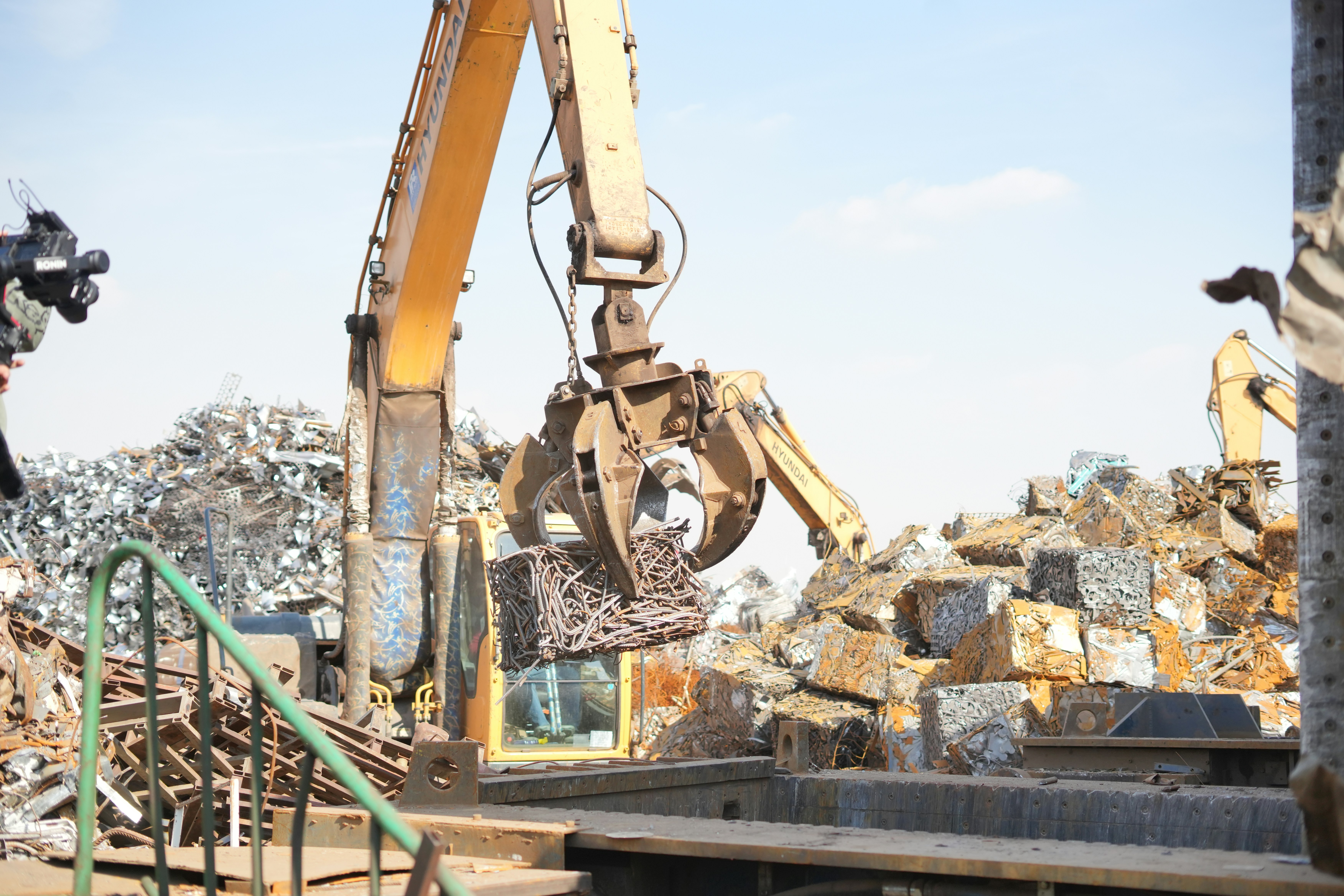
Once waste has been collected and sorted, another set of decisions begins: where should each material go, and which processing infrastructure should a country invest in? MBA student João Monteiro developed an optimisation prototype for KOLEKT that allows decision-makers to explore those choices across financial and environmental objectives.
Once waste has been collected and sorted, another set of decisions begins: where should each material go, and which processing infrastructure should a country invest in? MBA student João Monteiro developed an optimisation prototype for KOLEKT that allows decision-makers to explore those choices across financial and environmental objectives.
Why do difficult decisions continue after waste has been sorted?
A Material Recovery Facility separates collected waste into different material streams. From there, planners still need to decide whether those materials should go to different processing technologies or to final disposal, and whether additional processing capacity should be built.
Those decisions affect several outcomes at once. Processing can recover material value and reduce reliance on landfill, but new infrastructure requires capital. Different processes also have different implications for greenhouse-gas emissions and the amount of material recovered.
Monteiro’s research therefore focused on the part of the waste system after sorting: how should materials be allocated and processing capacity developed over time?
The challenge is to make several objectives visible in the same decision.
Why is this an optimisation problem?
An infrastructure decision made today can constrain what a waste system is able to process years later. At the same time, planners may care about several objectives: financial return, greenhouse-gas emissions, material recovery and reducing landfill.
Monteiro developed a Mixed-Integer Linear Programming model — a form of mathematical optimisation suited to decisions that combine continuous quantities, such as tonnes of material, with discrete choices, such as whether to invest in a new process.
The model works across a multi-year planning horizon. Practitioners can specify the question they want to examine and apply constraints or targets, while the optimisation identifies plans that satisfy those conditions.
The model therefore turns broad sustainability goals into explicit choices and constraints.
Why does the model show alternatives instead of one answer?
Waste infrastructure decisions involve trade-offs, so Monteiro’s model was deliberately designed not to return a single universal “best” plan.
Instead, practitioners can examine alternative plans and see how choices change when they prioritise financial or environmental objectives differently. A plan that performs strongly on one measure can then be compared with plans that put more weight on another.
The research tested the framework through national case studies for Saudi Arabia, Brazil and the Netherlands. Despite using the same modelling structure, the cases produced different but interpretable solutions because their underlying systems and data differed.
The useful output is therefore a set of choices and trade-offs, not a universal prescription.
Can this type of optimisation be used interactively?
For decision support, speed matters. A model that takes hours to produce one scenario makes it difficult for practitioners to change an assumption and immediately examine the consequences.
In the three case studies, each national instance solved in less than one second using open-source software. This makes it possible to think of optimisation as an exploratory tool: adjust a budget, target or assumption, run the model again, and compare how the resulting plan changes.
What does this contribute to the wider KOLEKT project?
The Waste Simulator already enables users to understand waste flows, operating costs, required investment and potential EPR revenues over a ten-year planning horizon.
Monteiro’s research extends the planning question further downstream. Once waste reaches sorting facilities, the prototype can examine how processing capacity and material allocation could change under different financial and environmental priorities.
The model was prepared as a deployable prototype rather than as a final investment recommendation system. Its case studies use public national data and proxy values, so the strongest contribution is the decision framework itself: a way to make competing objectives explicit and compare the consequences of different choices.
What can the findings mean for other applications?
The project illustrates an important role for prescriptive analytics in sustainability decisions. Optimisation does not have to hide trade-offs behind a single score or tell a decision-maker what to do. It can make those trade-offs visible.
That matters wherever investment decisions combine financial constraints with environmental or social objectives. Instead of asking for one mathematically optimal answer, decision-makers can explore how much one objective changes when another becomes more demanding.
For waste management, the next step is to connect this type of model with sufficiently detailed, locally validated data so that strategic comparisons can move closer to specific investment decisions.
The broader value is the ability to see the choices before committing resources.
